
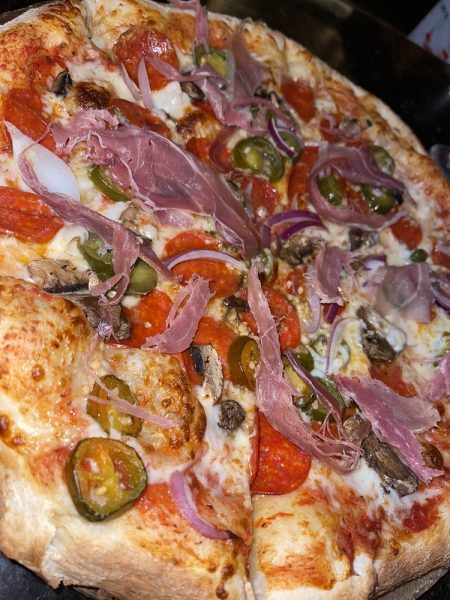
Prosciutto transforms pizza from a simple meal into something memorable. This dry-cured Italian ham adds a salty-sweet contrast that works with nearly every pizza style, from classic margherita to white pizza with arugula. The thin slices crisp at the edges when heated, creating texture differences that keep each bite interesting.
The reason prosciutto works so well comes down to its curing process. Dry-aging for months develops complex flavors that complement melted cheese and tomato sauce without overwhelming them. Unlike other pizza meats that can turn greasy or tough in high heat, prosciutto maintains its delicate texture whether added before or after baking.
Most pizzerias add prosciutto after the pizza comes out of the oven. This preserves the meat’s silky texture and prevents it from drying out. The residual heat from the pizza warms the prosciutto just enough to release its aroma and slightly soften the fat, which helps it stick to the other toppings.
The Curing Process That Changes Everything
Traditional prosciutto production takes 12-36 months. Salt draws moisture from the pork, concentrating flavors while beneficial bacteria develop the characteristic taste. This long aging creates glutamates—the same compounds that make parmesan cheese and tomatoes so satisfying.
Regional Differences in Italian Prosciutto
Prosciutto di Parma and Prosciutto di San Daniele represent the two main styles. Parma versions tend toward sweetness with a buttery finish. San Daniele prosciutto has a slightly firmer texture and more pronounced saltiness. Both work on pizza, though many chefs prefer San Daniele for its ability to maintain structure on a hot pie.
Texture Contrast You Can Actually Taste
Great pizza needs textural variety. Prosciutto delivers this without adding heaviness. The paper-thin slices drape over other toppings, creating pockets where the meat crisps slightly while other areas remain soft. This variation makes each bite different from the last.
The fat in prosciutto melts at lower temperatures than other pizza meats. When placed on a fresh pizza, it softens and integrates with the cheese. When added after baking, it provides a cool contrast against hot dough—a technique many Italian restaurants use to maximize the textural experience.
How Prosciutto’s Flavor Profile Works With Pizza
Prosciutto brings umami and salt without the smoke or spice of other cured meats. This lets the other ingredients speak for themselves. Fresh mozzarella’s mild creaminess needs something to balance it, and prosciutto’s salt does this job without adding competing flavors.
The sweetness in prosciutto comes from the pork itself, not added sugars. This natural sweetness pairs well with slightly acidic tomato sauce or bitter greens like arugula. The combination creates a balanced flavor profile that doesn’t rely on heavy seasoning.
Italian Pizza Tradition and Prosciutto
Classic Combinations Worth Trying
Italian pizza culture treats prosciutto as a finishing ingredient rather than a topping that gets baked. Here’s what works:
- Prosciutto e Rucola: Arugula and prosciutto on a white pizza base with shaved parmesan
- Prosciutto e Funghi: Mushrooms and prosciutto with mozzarella and truffle oil
- Prosciutto e Fichi: Fig jam, prosciutto, and gorgonzola for a sweet-savory combination
- Prosciutto Crudo: Simply prosciutto on margherita pizza, added after baking
Cheese Pairings That Maximize Prosciutto’s Potential
The Best Cheese Matches
Not all cheeses work equally well with prosciutto. The right pairing enhances both ingredients:
- Fresh Mozzarella: Mild and creamy, lets prosciutto’s flavor dominate without interference
- Burrata: The creamy center adds richness that complements prosciutto’s lean texture
- Goat Cheese: Tangy and slightly acidic, cuts through prosciutto’s salt
- Gorgonzola: Strong blue cheese creates an intense flavor combination for adventurous eaters
- Parmesan: Hard, aged cheese adds another umami layer that reinforces prosciutto’s savory notes
Getting Your Prosciutto Pizza Right
Most restaurants give you options for how much prosciutto you want. More isn’t always better—too much can make the pizza salty and overpower the other ingredients. A standard serving of 2-3 ounces provides enough flavor without dominating the pie.
Ask whether the prosciutto goes on before or after baking. Post-bake application keeps the meat tender and prevents it from turning crispy throughout. If you prefer some crispy edges, request that half gets added before baking and half after.
Experience Prosciutto Pizza Done Right in Downtown San Diego
Pizza on 5th serves authentic Italian-style pizza with imported prosciutto di Parma. Our pizzas use traditional techniques, adding prosciutto after baking to preserve its delicate texture. Stop by our downtown San Diego location to taste the difference quality ingredients make. We’re open seven days a week for lunch and dinner.